

How to Keep Cut Flowers Fresh Longer: 2026 Guide
Table of Contents
- How to Keep Cut Flowers Fresh Longer: Start With a Clean Cut
- How to Trim Flower Stems for Better Water Uptake
- How Often to Change Flower Water (and Why It Matters)
- Flower Food for Cut Flowers: Commercial vs Homemade Recipes
- How Long Do Cut Flowers Last? Realistic Vase Life by Variety
- Troubleshooting Wilting and Drooping: How to Revive Cut Flowers
- Your Daily and Weekly Flower Care Schedule
- Conclusion: Small Habits, Longer-Lasting Blooms
- Frequently Asked Questions
Last Updated: October 14, 2026
How to Keep Cut Flowers Fresh Longer: Start With a Clean Cut
Learning how to keep cut flowers fresh longer comes down to one habit: a clean, angled cut on day one.
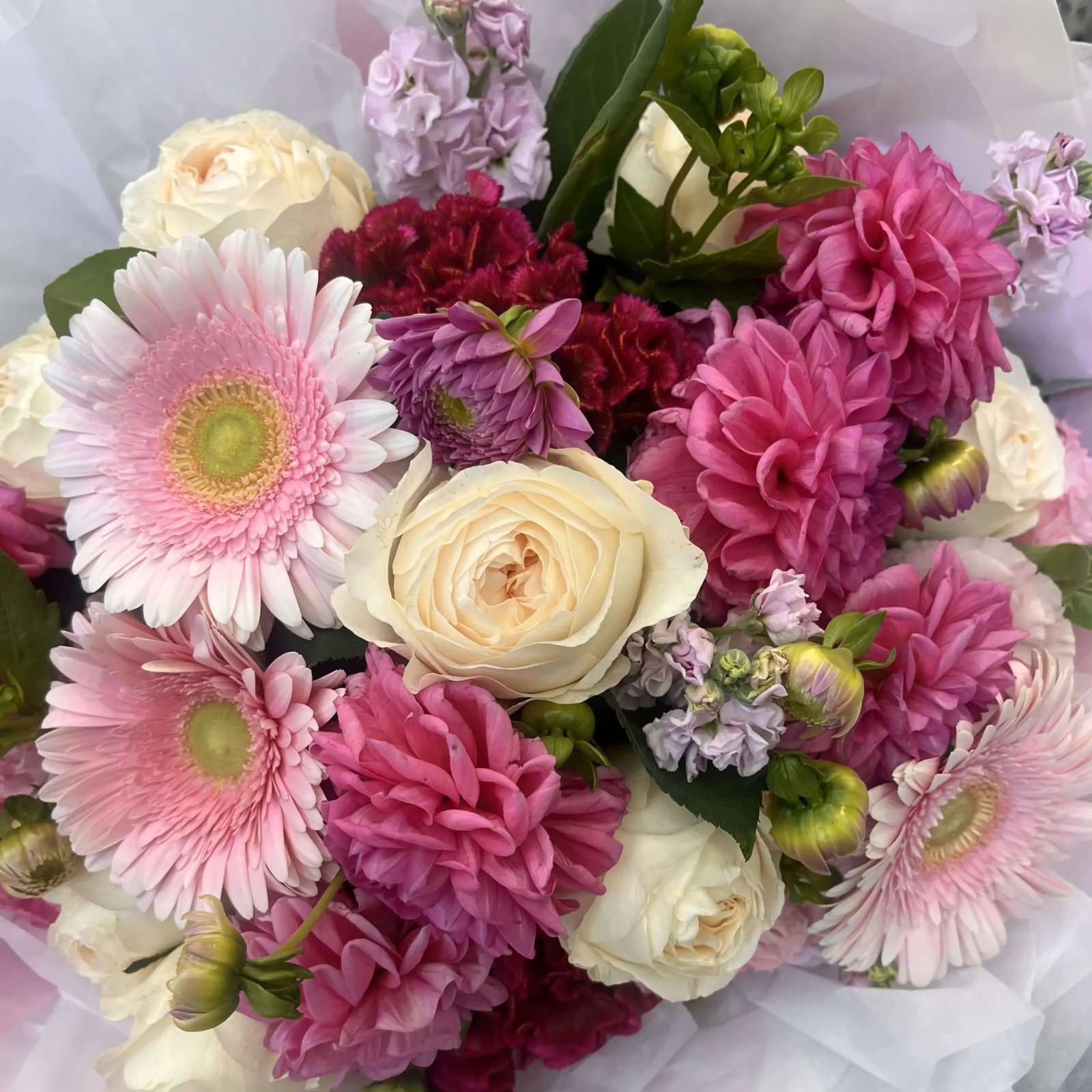
Cut flowers are stems and blooms that have been separated from the plant and rely on water taken up through the stem.
Most arrangements fail for a boring reason. Bacteria build up at the cut end and block the flow of water.
At Berwick Flowers, every bouquet is hand-built in our studio, so we see this daily.

Below, we'll show you exactly how to trim, water and feed your flowers, plus a simple daily routine.
How to Trim Flower Stems for Better Water Uptake
Trim stems at a 45-degree angle with sharp, clean snips, removing 2 to 3 centimetres from the base. Cut under water if you can. An angled cut exposes more surface area, so the stem takes up water faster.
Follow these steps:
- Fill a clean bucket with room-temperature water.
- Strip any foliage that would sit below the waterline.
- Hold the stem under water and cut at an angle.
- Move the stem straight into the vase.
- Re-trim every two to three days.
The thing nobody tells you about stem prep is that a straight cut can sit flat against the bottom of the vase. The stem seals itself shut. An angle stops that.
Angled Cut vs Straight Cut: Which Works Best?
An angled cut wins for almost every flower you'll bring home. It keeps the stem end open and stops it resting flat on the vase base. A straight cut only suits stems you're wiring or foam-mounting for an event.
The trade-off is real: angled stems are harder to arrange tightly in a narrow vase. If you need a firm grid, cut straight, then re-trim at an angle once arranged.
For woody stems, such as lilac or hydrangea, split the base vertically about 2 centimetres with a sharp knife. This opens more of the stem to water.
How Often to Change Flower Water (and Why It Matters)
Change the water every two days, or daily in warm weather. Cloudy water means bacteria are already blocking the stem ends. Fresh water plus a re-trim is the fastest fix.
Here's what most guides miss: topping up the vase is not the same as changing it. Old water holds dissolved bacteria and plant debris. You need to tip it out and start again.

Do this each time:
- Lift the flowers out and set them aside.
- Tip out the old water completely.
- Rinse the vase with warm soapy water.
- Refill with cool, clean water.
- Re-trim 1 centimetre off each stem.
- Add flower food if you have it.
Keep the water level topped up between changes. Stems left dry for even an hour can seal over.
Water Temperature and Quality: What Actually Helps
Water temperature is the most misunderstood variable in cut-flower care. The right answer depends on the stem, not on a single rule.
Cool water, around 15 to 20°C, suits most stems. That is cooler than a warm room but not cold enough to shock tissue.
Water quality matters as much as temperature. Most tap water in Australia is treated with chlorine or chloramine, which is fine for drinking but can slow uptake at the cut end. Two practical options:
- Let tap water stand in an open jug for about an hour before use. This lets chlorine dissipate. It does not remove chloramine, which is more stable.
- Use filtered water if your tap water is heavily treated or very hard. Hard water leaves mineral deposits that can clog the stem's water channels over several days.
Skip the ice cubes. They lower the temperature too fast and stress the blooms.
Refresh, don't just top up. Every time you change the water, rinse the vase with warm soapy water and a bottle brush.
Flower Food for Cut Flowers: Commercial vs Homemade Recipes
Commercial flower food is the most reliable option because it contains three things working together: a food source, an acidifier and an antibacterial agent. Homemade recipes can help, but they usually only cover one of those jobs.
This is where a lot of advice online goes wrong. People reach for sugar alone, which feeds the flowers and the bacteria equally.
What Each Ingredient Actually Does
Understanding the mechanism makes the choice obvious.
- Sugar (sucrose or glucose) feeds the flower. Cut stems have limited energy reserves, and sugar replaces some of what the plant would normally produce. The problem: bacteria eat sugar too, and a sugar-rich vase becomes a breeding ground within a day.
- Acid (vinegar, citric acid, lemon juice) lowers the water's pH. Most cut flowers take up water more efficiently in slightly acidic conditions (around pH 3.5 to 5). Acid also slows bacterial growth, but only mildly.
- Antibacterial agent (bleach, commercial biocide) is the missing piece in most homemade recipes. Without it, sugar and acid alone cannot keep the water clean for more than a day or two.
- Commercial flower food combines all three in a measured dose, which is why it outperforms any single-ingredient home mix.
A Transparent Comparison of Common Recipes
| Recipe | What It Does | Best For | Watch Out For |
|---|---|---|---|
| Commercial flower food | Feeds, acidifies, fights bacteria | Most cut flowers | Follow the sachet dose; more is not better |
| Sugar + vinegar | Feeds and mildly acidifies | A short-term top-up | Sugar feeds bacteria too; change water daily |
| Sugar + bleach drop | Feeds and sanitises | Stems prone to slime | Bleach is easy to overdo; one drop per litre is plenty |
| Plain cool water | Hydration only | Delicate blooms | No bacteria control; change daily |
| Aspirin | Mild acidification | Anecdotal use | No reliable antibacterial effect; can leave residue |
| Baking soda | Raises pH | Not recommended | Most flowers dislike alkaline water |
Does Vinegar, Sugar or Baking Soda Really Work?
Vinegar and sugar can help for a day or two, but neither replaces a proper flower food. Baking soda does very little for cut stems and can raise the water's pH, which most flowers dislike.
Aspirin is a common home remedy, but the evidence for it is weak. It acidifies water slightly, which may help uptake, but it does not control bacteria. If you use it, change the water daily.
Floral Hug Luxury Flower Vase →
Our honest take: if you have a sachet of commercial food, use it. If you don't, clean water changed daily beats a weak homemade mix.
A Note on Dose and Water Volume
Flower food sachets are sized for a specific volume of water, usually 500 millilitres to 1 litre. If your vase holds more, use two sachets or make up a fresh batch.
If you are mixing your own, keep the ratios simple: one teaspoon of sugar and one teaspoon of white vinegar per litre of water, plus a single drop of bleach if you are comfortable handling it. Change the water daily. This is a short-term fix, not a substitute for commercial food.
How Long Do Cut Flowers Last? Realistic Vase Life by Variety
Vase life varies hugely by variety, and no care routine can beat a flower's natural limit. Expect roughly 7 to 10 days for most mixed arrangements kept cool and re-trimmed.
Set your expectations by type:
- Roses: about 7 to 10 days with regular re-trimming
- Lisianthus: around 7 to 12 days, and it holds well
- Carnations: often 10 to 14 days, one of the longest-lasting
- Tulips: 5 to 7 days, and they keep growing in the vase
- Gypsophila: 7 to 14 days, and it dries well afterwards
- Hydrangea: 5 to 7 days, and it drinks heavily
Buying local matters here. Blooms cut and arranged the same morning start their vase life ahead of flowers that have travelled for days.
That's the practical case for a hand-built arrangement from a local studio. Our Floral Hug Luxury Flower Vase arrives with water already in the glass vessel, so the clock starts when it reaches the door.
Troubleshooting Wilting and Drooping: How to Revive Cut Flowers
Revive drooping flowers with a re-cut and a deep, cool water soak. Trim 2 to 3 centimetres off the stems at an angle, then stand them in cool water in a dark room for a few hours.
Work through this checklist:
- Re-cut the stems at an angle with sharp snips
- Strip any leaves sitting below the waterline
- Change to fresh, cool water
- Move the vase out of direct sun and away from heaters
- Give it 2 to 4 hours in a cool, shaded spot
If the stems still feel soft and the heads won't lift, the flowers are past saving. That's not a care failure, it's just time.
A common mistake is adding more flower food to a drooping bunch. Food won't fix a blocked stem. Only a fresh cut will.
Your Daily and Weekly Flower Care Schedule
A short routine keeps blooms going without much effort. Two minutes a day and one longer session a week is enough.
Daily (about 1 minute):
- Check the water level and top up if low
- Pick out any fallen petals or leaves
- Move the vase if it's catching direct sun
Every two days:
- Change the water completely
- Re-trim 1 centimetre off each stem
- Rinse the vase
Weekly:
- Deep-clean the vase with warm soapy water
- Remove any fading blooms so they don't affect the rest
- Reassess placement away from heat and drafts
Two placement rules do more than most people expect:
- Keep the vase out of direct sunlight.
- Move it away from heaters, air conditioners and drafty doorways.
Also, keep fruit bowls away from your flowers. Ripening fruit releases ethylene gas, which speeds up ageing in cut stems.
Conclusion: Small Habits, Longer-Lasting Blooms
Cut flowers fade on their own schedule, and the gap between a three-day bunch and a ten-day one is mostly routine.
The other half is where the flowers come from. Blooms that sit in a warehouse for days start behind.
At Berwick Flowers, we hand-build every arrangement in our Adams Lane studio and deliver it personally by local courier.
Order online before 2:00pm Monday to Saturday and we'll deliver fresh, seasonal blooms the same day across Berwick and the south east.
Frequently Asked Questions
How often should you change the water in a vase of flowers?
Change the water every two days, or daily if the water looks cloudy. When you change it, re-trim the stems by 1cm at an angle. This keeps cut flowers fresh by removing bacteria that block water uptake. If you use flower food, top up the water instead of replacing it completely, and make a fresh mix every two to three days.
Does vinegar make cut flowers last longer?
Vinegar alone does not extend vase life. Some homemade recipes mix vinegar with sugar, but the sugar feeds bacteria as well as the flowers. Commercial flower food for cut flowers is more reliable because it contains a biocide, an acidifier, and sugar in balanced amounts. If you use a homemade mix, change the water daily to limit bacterial growth.
Should you cut flower stems before putting them in water?
Yes. Always trim at least 2-3cm off the stems with a sharp, clean knife or floral scissors at a 45-degree angle. This opens up the stem's water uptake channels and gives the base more surface area to drink. Cut stems under water if possible to prevent air bubbles from blocking the xylem. Re-trim every two days to keep flowers hydrated.
How long do cut flowers last?
Most cut flowers last 7 to 10 days with proper care. Some varieties, like carnations and chrysanthemums, can last up to two weeks, while delicate blooms such as dahlias and sweet peas may only last 4 to 6 days. Vase life depends on the flower type, how fresh they were when cut, and how well you maintain the water and stems.


