

Why Online Flowers Arrive Wilted: Fix & Revive Guide
Table of Contents
- Why Online Flowers Arrive Wilted
- The Real Causes of Wilting in Transit
- How to Revive Wilted Flowers: A Step-by-Step Recovery Plan
- How to Trim Flower Stems for Better Water Uptake
- How Long Do Cut Flowers Last After Delivery?
- What to Do When Flowers Arrive Damaged
- Choosing a Florist That Delivers Fresh Blooms
- Frequently Asked Questions
Last Updated: October 21, 2026
Why Online Flowers Arrive Wilted
Why do online flowers arrive wilted? The short answer is that cut flowers are living stems under stress. Once they leave water, they start to lose hydration within hours, and a hot delivery van or a cramped box speeds that up. At Berwick Flowers, we hand-make every bouquet in our studio and deliver it ourselves, so we see the difference between a bloom that has travelled well and one that has not.
Here is the part most guides miss: a wilted flower is not automatically a dead one. Many arrive limp simply because their stems have sealed over or run dry in transit. The 8 fixes below have revived countless bouquets, and they take minutes to try.
But first, here is what most online flower guides get wrong. They blame the flower. Usually the problem is the trip, the packaging, or the water it sat in.
The Real Causes of Wilting in Transit
Wilting happens when a stem takes up less water than it loses through its petals. In a delivery context, that imbalance is driven by four things competitors rarely separate: how long the stems spent out of water, how the bouquet was packed, how much the temperature swung, and what was growing in the water it sat in. Each is fixable, and each leaves a different signature on the blooms.
Transit duration and time out of water
Cut stems lose hydration within hours of leaving water. A bouquet cut and delivered the same day may spend two to four hours in transit; one routed through a warehouse or interstate depot can spend a day or more. The longer the gap, the more the stem end seals over and the more the bloom relies on stored moisture. That is why two bouquets of the same variety can arrive in very different condition.
A common pattern is that the outermost petals, the ones most exposed, show dehydration first, while the inner bud still looks firm. If only the outer ring is limp, transit time is the likely culprit rather than disease.
Packaging and airflow
Packaging is a trade-off. Tight wrapping protects blooms from bruising but traps warm, humid air and limits airflow, which speeds water loss and encourages mould. Good florists pack with room to breathe, keep stems in a damp wrap or water source, and avoid sealing blooms against each other. If a box arrives warm to the touch or the wrapping is fogged with condensation, the blooms have been sitting in a microclimate that works against them.
Temperature swings
Heat is the other big driver, but swings matter as much as peaks. A delivery van parked in the sun, a box left on a doorstep, or a cold store followed by a warm lounge all raise the temperature around the blooms. Flowers lose water faster in heat, and petals wilt sooner. Cold injury is the mirror problem: blooms held too cold can look limp and glassy rather than dry, and they do not recover the same way.
Bacteria buildup and blocked stems
Water sitting in a bucket or box turns cloudy fast. Bacteria and fungi multiply in that water and clog the cut end of each stem. Once the stem end is blocked, water uptake stalls and the bloom droops. A common mistake is topping up a vase without changing the water, that just feeds the bacteria. Clean, fresh water is the single best defence.
How to Revive Wilted Flowers: A Step-by-Step Recovery Plan
Most wilted flowers can be revived, but not all. The first job is triage: decide whether the blooms are temporarily dehydrated or genuinely damaged. The second is to run a timed protocol so you are not guessing.
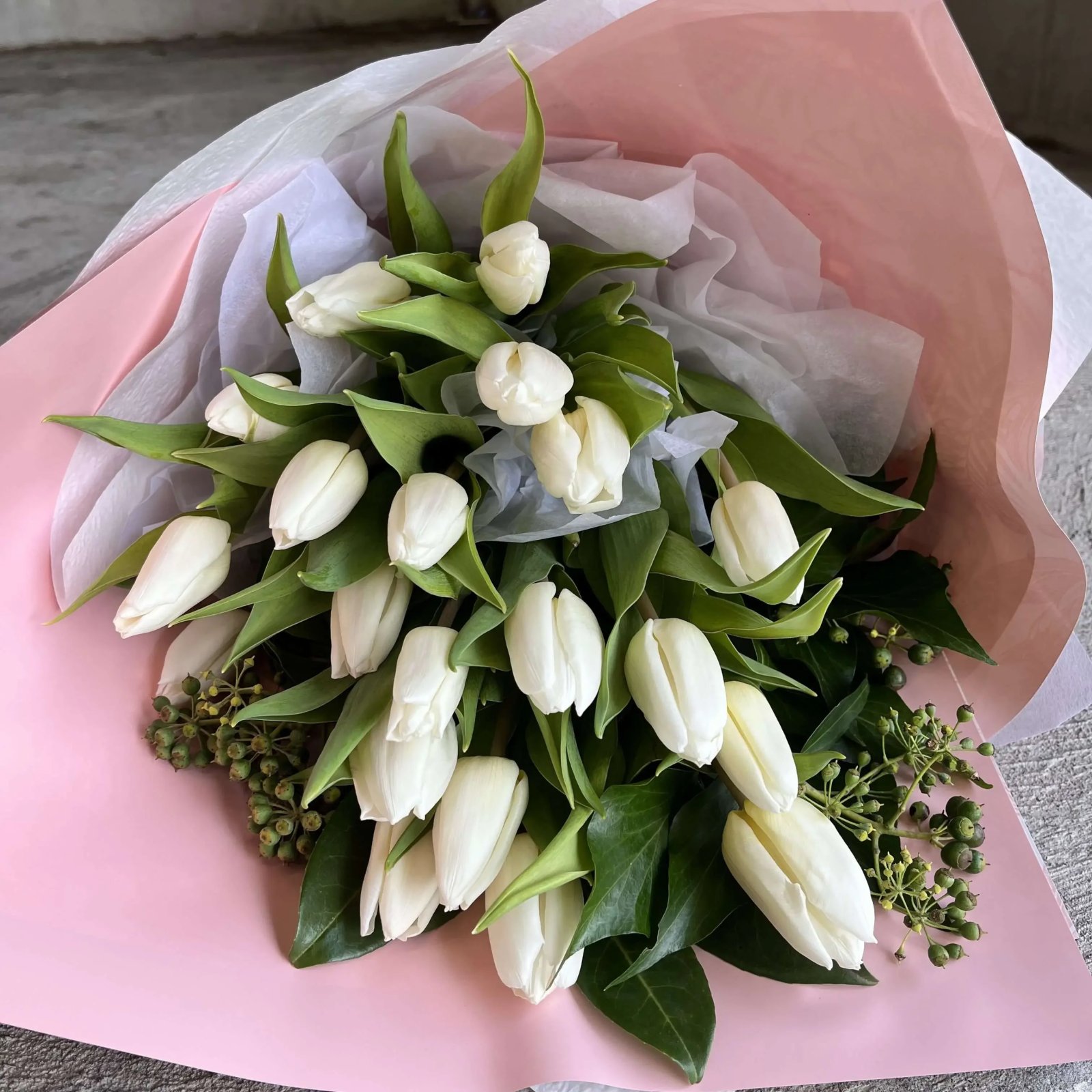
Triage: is it recoverable?
Check three things before you cut anything:
- Stem firmness. A stem that is limp but pliable is usually dehydrated and recoverable. A stem that is mushy, brown at the base, or snaps cleanly is damaged.
- Petal texture. Dry, papery outer petals with a firm inner bud usually mean dehydration. Glassy, translucent, or blackened petals suggest cold or heat injury, which is harder to reverse.
- Smell and water. Cloudy, foul-smelling water and slimy stem ends point to bacteria. That is fixable, but the stems need a fresh cut above the slime line.
If the stems are firm and the inner bud is intact, proceed. If the base is mushy or the blooms smell sour, the flowers are past their usable life and the seller should be contacted.
Timed unboxing and rehydration protocol
Work through this in order, and note the time you start.
- Unwrap and inspect (0-5 minutes). Remove all packaging and check for broken stems or mushy petals. Photograph the arrangement as it arrived before you change anything.
- Fill a clean vase with cool water and add flower food. Use the sachet ratio on the packet rather than guessing.
- Recut the stems at an angle with sharp scissors. Take off 2-3 cm, or more if the base is slimy.
- Strip leaves below the waterline. Wet leaves rot and feed bacteria.
- Place stems in the water straight away. Do not let cut ends dry out.
- Move the vase somewhere cool and shaded for a few hours. Avoid direct sun and draughts.
- Recheck after 3-4 hours. Most blooms perk up as water uptake resumes. Note which stems have not.
- Recut any stubborn stems once more and change the water. A second trim often clears the blockage.
- Change the water every two days to keep bacteria down.
When to stop trying
Set a 24-hour limit. If the flowers are still limp after a recut, fresh water, and a cool rest, the damage is likely structural or temperature-related rather than simple dehydration. At that point, the practical step is to report it to the seller rather than keep cutting. Keep the blooms and your photos until the issue is resolved, most sellers will ask for them.
How to Trim Flower Stems for Better Water Uptake
Cut on an angle, with a sharp tool, and do it under water if you can. An angled cut gives the stem more surface to drink from. A clean cut matters more than a wide one, because a crushed stem seals over and blocks water.
- Use sharp scissors or secateurs, not a blunt knife.
- Cut 2-3 cm off the base at about 45 degrees.
- Trim under running water or in a bowl to stop air bubbles.
- Recut every couple of days, or when you change the water.
- Remove any leaves that would sit below the waterline.
Avoid cutting near a leaf node if you can. The stem drinks best from a clean section.
How Long Do Cut Flowers Last After Delivery?
How long cut flowers last depends on the flower type and how they are cared for. Many common blooms hold for around a week with good care, while hardier stems can last longer and delicate ones fade sooner.
Freshness on arrival is the biggest factor. Flowers cut and delivered the same day start with a head start. Flowers that spent days in transit or in a warehouse begin their vase life already tired.
Care closes the gap. Cool water, a clean vase, regular recuts, and flower food all extend flower lifespan. Keep arrangements away from heat and direct sunlight.
Different varieties also have different expectations. Some flowers open slowly and last well. Others are naturally short-lived. Ask your florist what to expect for the specific blooms you order.
What to Do When Flowers Arrive Damaged
If flowers arrive damaged, take photos straight away and contact the seller the same day. Most reputable florists want to fix it, and a clear photo helps them do that fast.
Here is what to do when flowers arrive damaged:
- Photograph everything before you touch the arrangement.
- Note the delivery time and the condition on arrival.
- Start the recovery steps above in case the blooms are recoverable.
- Contact the seller with your order number and photos.
- Ask what they will do, whether a replacement, a refund, or care advice.
Choosing a Florist That Delivers Fresh Blooms
The best way to avoid wilted flowers is to choose a florist who controls the whole trip. A local florist who cuts, arranges, and delivers on the same day removes most of the transit risk.
Ask a few direct questions before you order:
- Are the flowers arranged in-house or shipped in from a warehouse?
- Is same-day delivery available to your area?
- How are bouquets packed for the trip?
- What is the policy if flowers arrive damaged?
At Berwick Flowers, every bouquet is designed and made by hand in our studio, not shipped in from an interstate warehouse. We deliver same-day across the region, so blooms spend hours in transit, not days. That is the difference you pay for over a big online platform.
For a birthday or anniversary, fresh local delivery means the flowers arrive ready to enjoy, not ready to revive. If you are sending get well flowers or a sympathy arrangement, freshness matters even more.
Frequently Asked Questions
Why do flowers arrive wilted after delivery?
Wilted flowers after delivery usually stem from time out of water, heat exposure during transit, or bacteria buildup in the packaging water. Stems can also be crushed or blocked, preventing water uptake. Online orders that travel through multiple depots or sit in warm vehicles are more prone to premature wilting. Choosing a local florist who handcrafts and delivers directly reduces transit time and handling, so blooms arrive fresher.
Can wilted flowers recover after being put in water?
Many wilted flowers do recover once rehydrated, especially if the wilt is mild and the stems are recut. Trim 2-3 cm off the stem ends at an angle, place them in clean water with flower food, and keep them out of direct sunlight. Most blooms perk up within 4-6 hours. Flowers that are brown, mushy, or have drooping heads may not recover, but it's worth trying the revival steps first.
How long should fresh-cut flowers last after delivery?
Most cut flowers last between 5 and 10 days after delivery, depending on the variety and care. Hardy blooms like carnations and chrysanthemums can last up to two weeks, while delicate flowers such as tulips and sweet peas may only last 4-5 days. Changing vase water every two days, recutting stems, and keeping flowers away from heat and drafts will help them reach the longer end of that range.
What should you do if delivered flowers arrive damaged or wilted?
If flowers arrive damaged or severely wilted, take photos immediately and contact the seller the same day. Most florists have a freshness guarantee and will offer a replacement or refund. Check the seller's policy before ordering. For minor wilting, try the revival steps first: recut stems, fresh water, and flower food. If the blooms don't recover within 24 hours, follow up with the seller and provide your order number and photos.
Wilted flowers are frustrating, but the cause is usually the trip, not the bloom. If you want flowers that arrive fresh and ready, choose a florist who arranges and delivers locally on the same day. Berwick Flowers hand-makes every bouquet in our studio, offers same-day delivery across the region, and uses fresh seasonal blooms in every design. Order online with Berwick Flowers and send flowers that arrive the way they should.


